


Automatic labelling machines for products and packaging
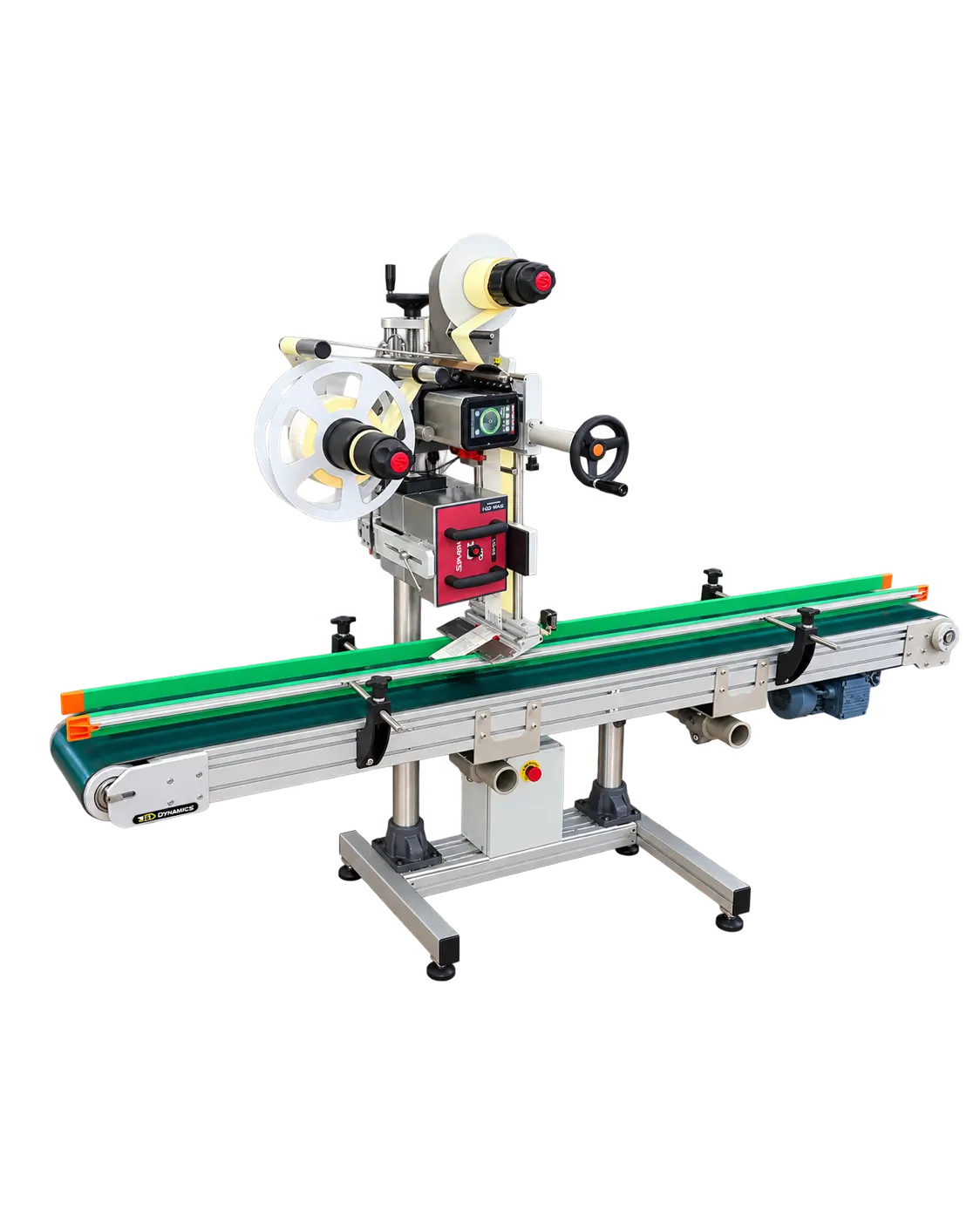
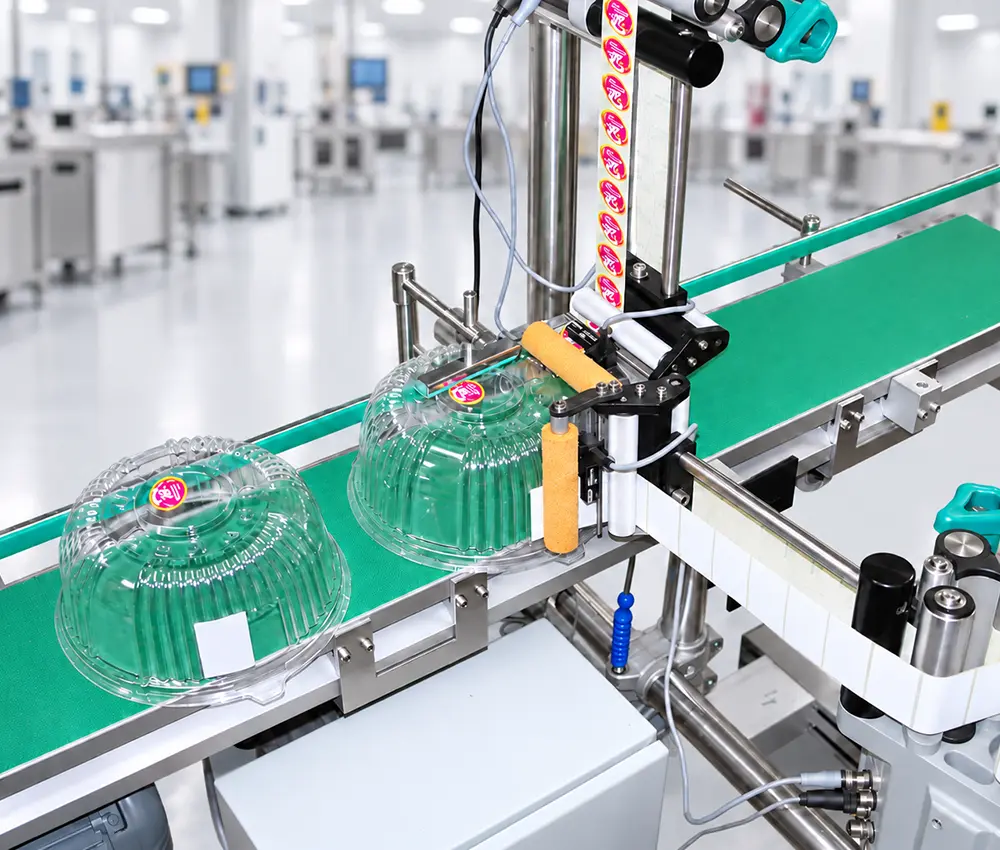
An automatic labelling machine combines label application with the equipment needed to present each product consistently. Depending on the installation, this may include a conveyor, guides or orientation devices, sensors, controls and one or more labelling heads. We configure systems using Novexx and Savema equipment for top or side labels, separate front and back labels, wrap-around labels on round containers, or labels spanning several faces.
These systems apply self-adhesive labels to bottles, jars, trays, cartons, cases and other packaging used in food, beverage, pharmaceutical, cosmetics and household goods production. Standard configurations may be suitable for some lines; others need product handling and controls designed around the existing equipment. Variable-data printing can also be integrated where required. Forintek-Baltija can help specify, install and maintain the complete solution.
Reliable labelling starts with product handling
Labelling head speed, width and dispensing accuracy matter, but the way a product moves through the machine is just as important. A label can be crooked even when the head dispenses it accurately, if the pack tilts, vibrates or reaches the applicator at the wrong distance. Guides, side belts, orientation devices and correctly positioned sensors help keep products stable and maintain consistent label placement. The right arrangement depends on the pack shape, conveyor speed and where each label must go.
What you get from a complete system
Stable conveying
The conveyor and guides are selected to keep products steady and appropriately spaced as labels are applied. The aim is to minimise vibration and changes in product position that can affect label placement.
Orientation and centring
When a label must face a seam, panel or handle, the product may need turning or centring before it reaches the labelling head. The handling arrangement is chosen to suit the container and the required label position.
Coordinated labelling heads
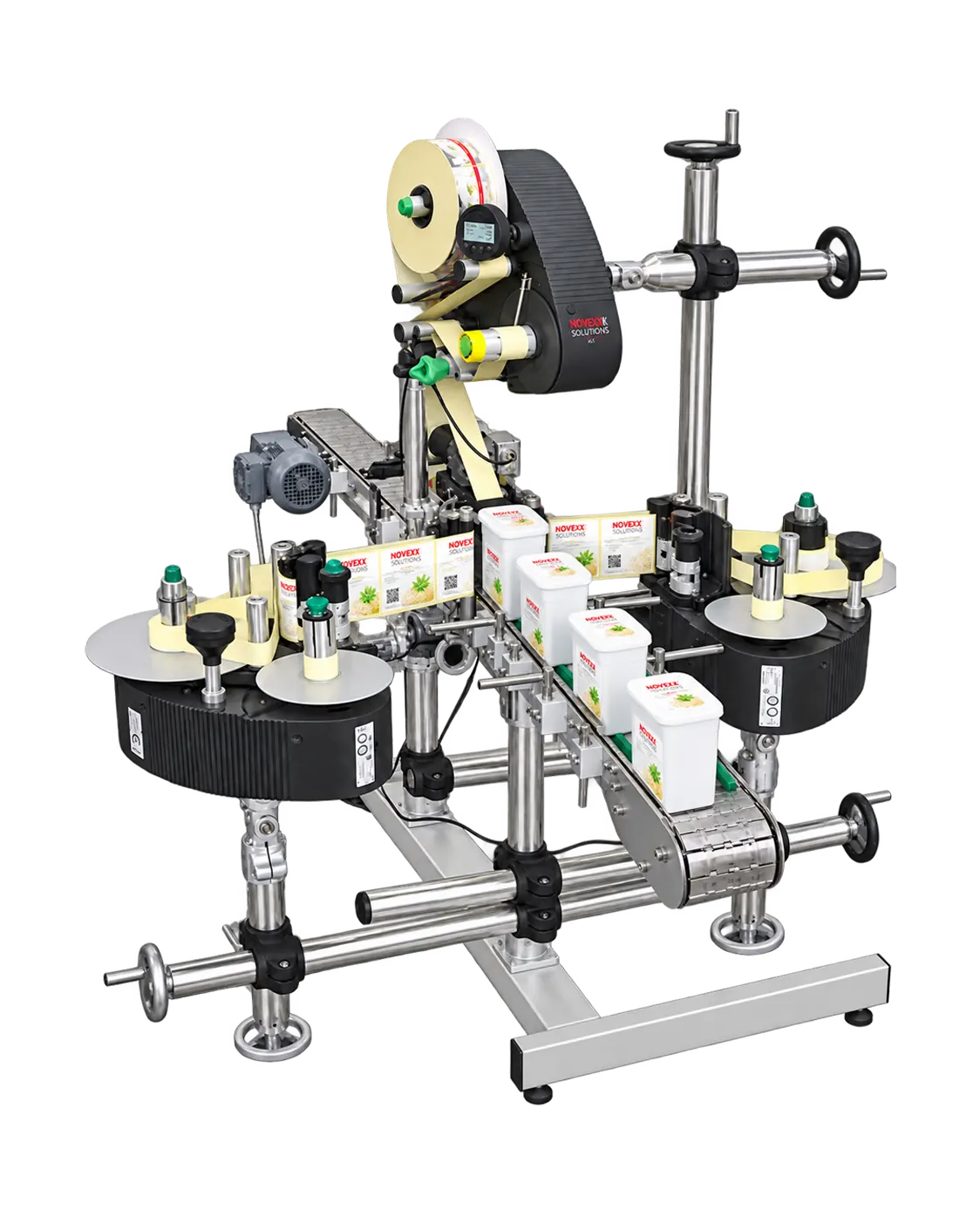
Systems with two or three heads can apply separate labels to different faces during one pass. The conveyor and sensors help coordinate their positions. A single long wrap-around or C-wrap label, however, can cover several faces using just one head.
Established labelling equipment
We use Novexx and Savema labelling equipment with published specifications and service documentation. A modular arrangement can make individual components easier to maintain or replace, subject to the machine design and available parts.
Format changeover
If a line handles several pack sizes, adjustable guides and repeatable settings can simplify changeovers. Tell us the full range of products and labels when specifying the machine, so the necessary adjustments can be planned from the start.
Installed, commissioned, supported
We can assess the production line, specify the equipment, organise installation and commissioning, train operators and provide service and consumables. The scope is agreed for each project.
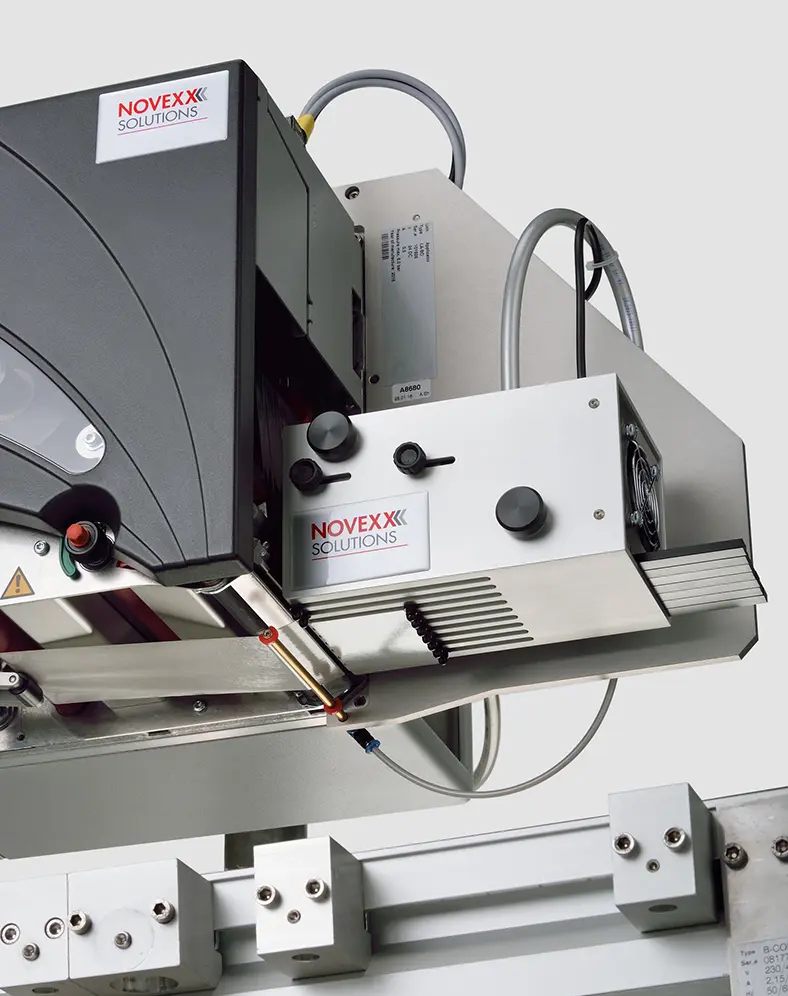
Typical system components
There is no single specification for every labelling machine. The equipment depends on the container, the number and position of labels, the required output and the existing production line.
- Labelling heads: One, two or three
- Conveyor: Designed for stable product movement
- Product handling: Guides, side belts, orientation
- Applicators: Tamp, blow-on, wipe-on, corner-wrap
- Controls: Cabinet, sensors, encoder
- Optional: Printing, inspection, reject station
Common label application methods
The best method depends on the product shape, the surface to be labelled and whether the design calls for one continuous label or several separate labels.
Top labelling
A label is applied to the top of a tray, lid, carton or other suitable pack. This is often a straightforward solution when a product has a stable, accessible upper surface.
Side labelling
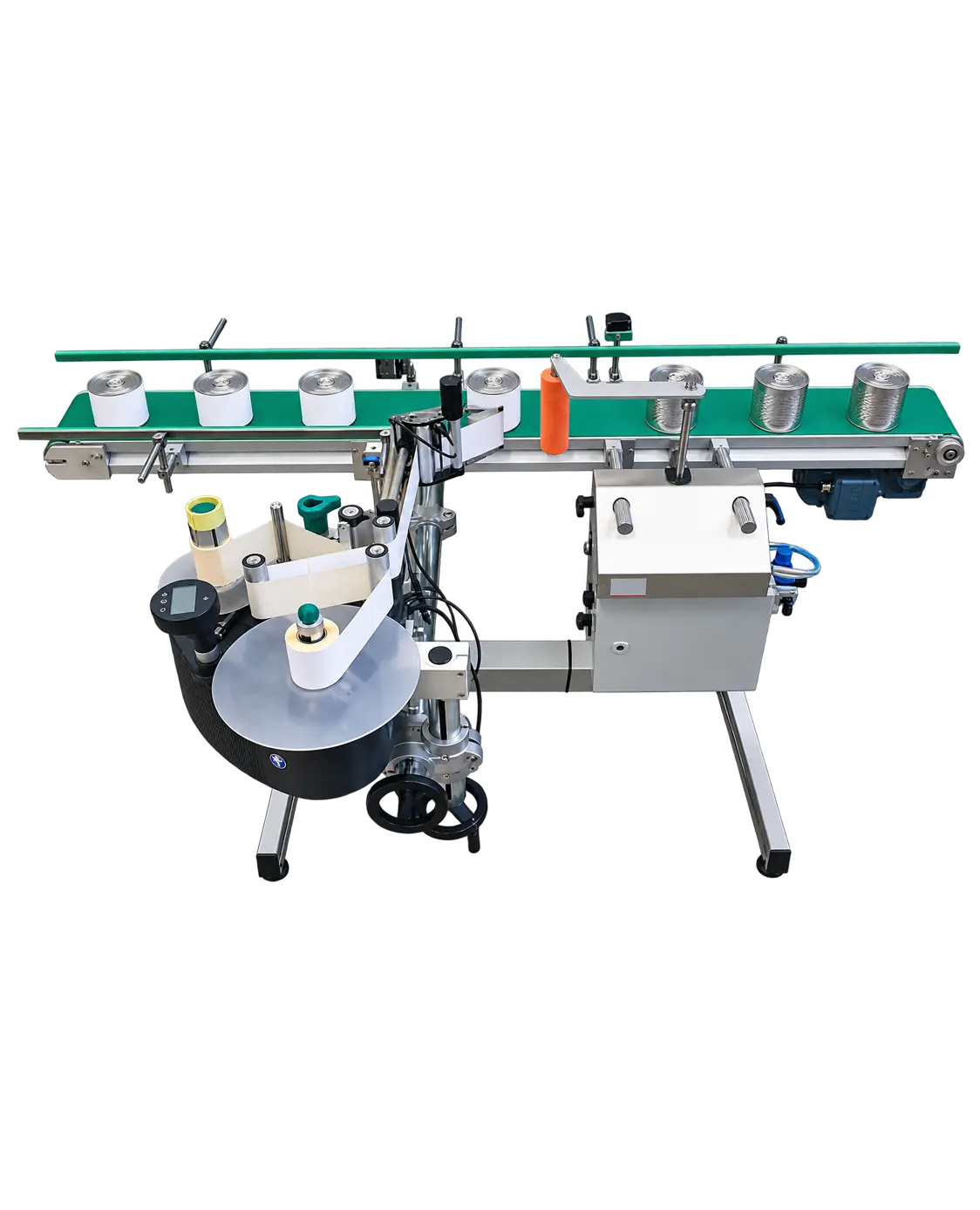
A label is applied to the side of a bottle, jar, tub or case as it passes the labelling head. Where the label must face a particular direction, an orientation device may be required.
Wrap-around labelling
A continuous label is applied around a suitable round container while the container rotates. Label length, container shape and alignment determine whether the ends meet or overlap. Common uses include cylindrical bottles, jars and cans.
Front and back labelling
Two separate labels are applied to opposite sides of a container in one pass, usually for branding on one face and product information on the other. This can be suitable for oval or flat-sided bottles where a full wrap-around label would be difficult to apply evenly.
Top and bottom labelling
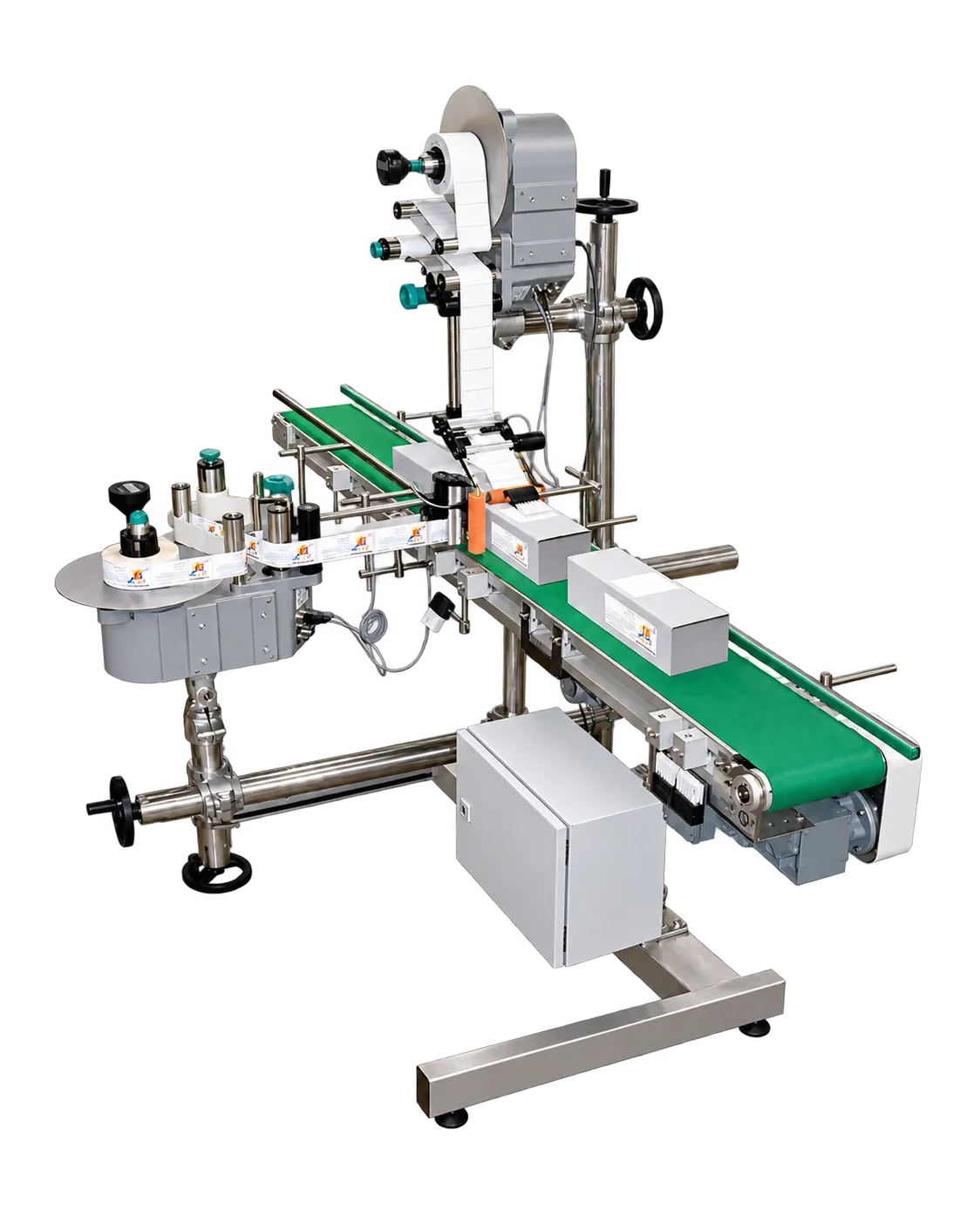
Labels are applied to the top and underside of a product, using a conveyor arrangement that allows access to both surfaces. This is useful when branding appears above and a barcode or traceability label is needed below.
Three-face labelling and C-wrap
Three faces can be labelled with separate labels using multiple heads, or with one continuous C-wrap label folded over adjoining faces. These are different configurations, and a C-wrap does not automatically require three labelling heads. Corner-wrap seals similarly use one label across two faces.
Labelling systems in action
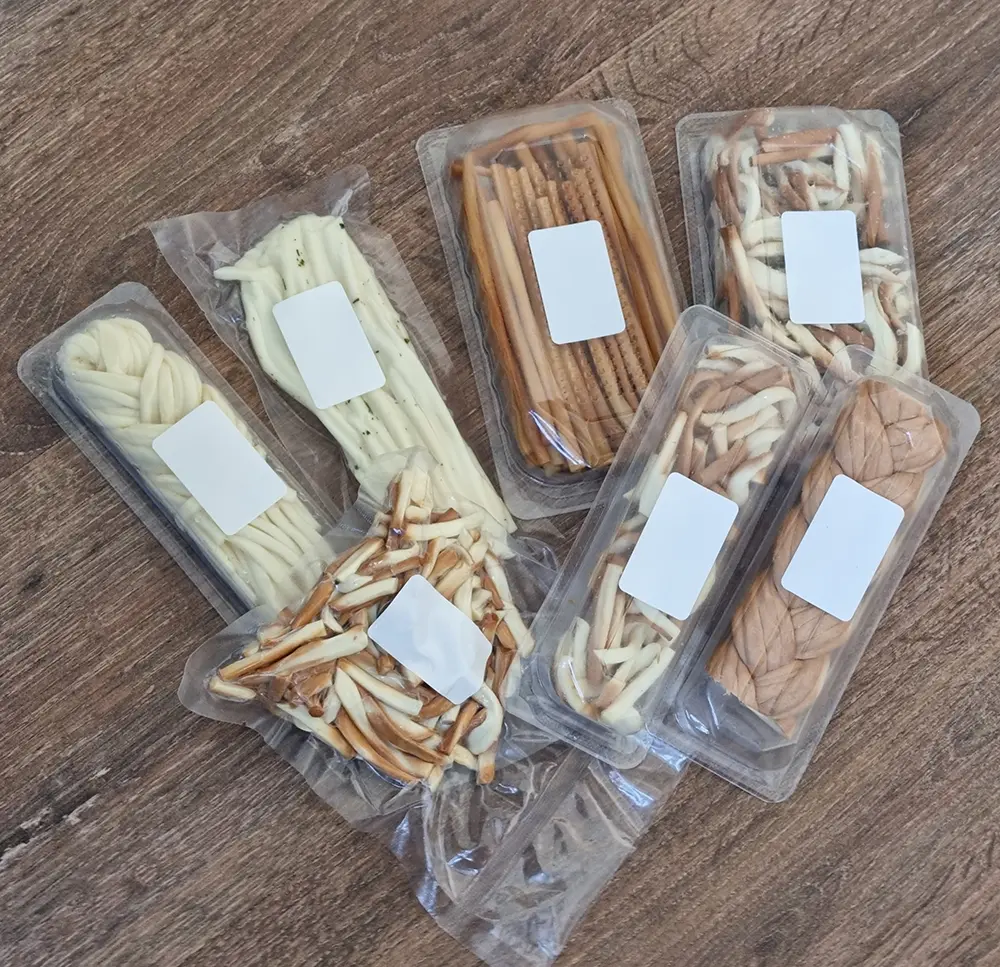
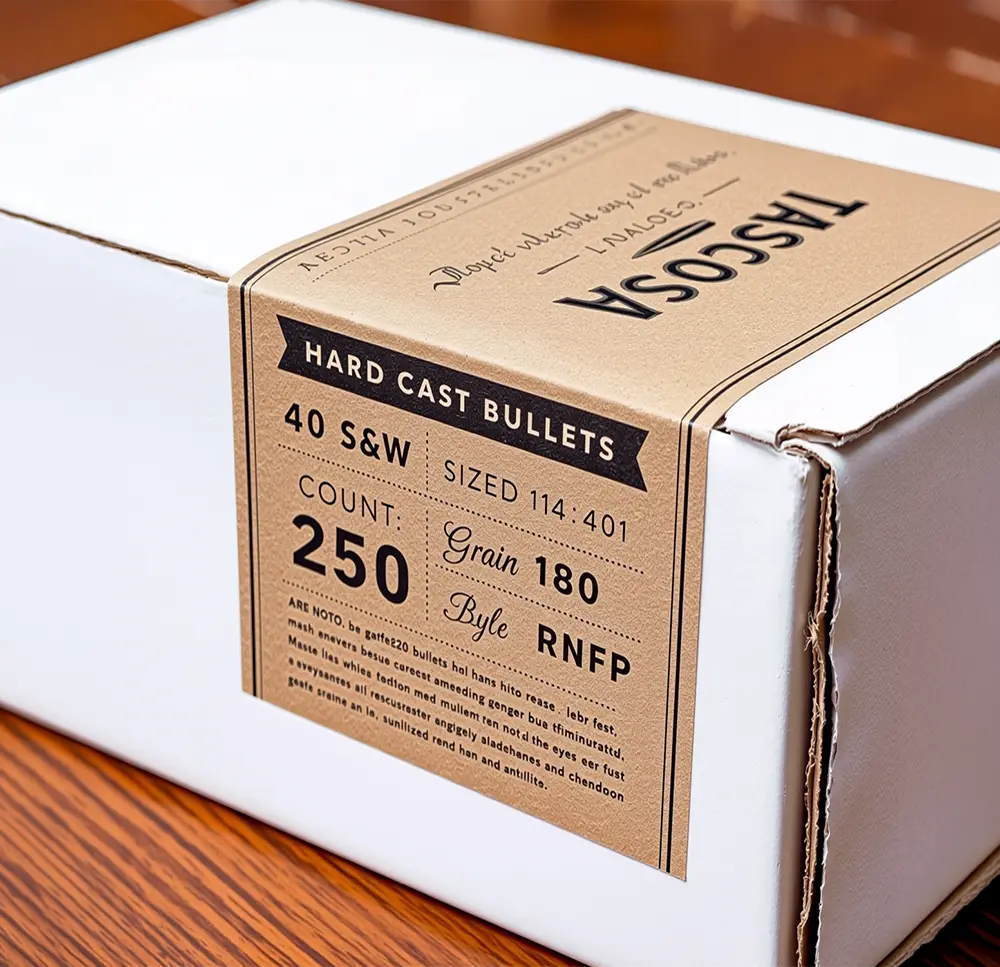
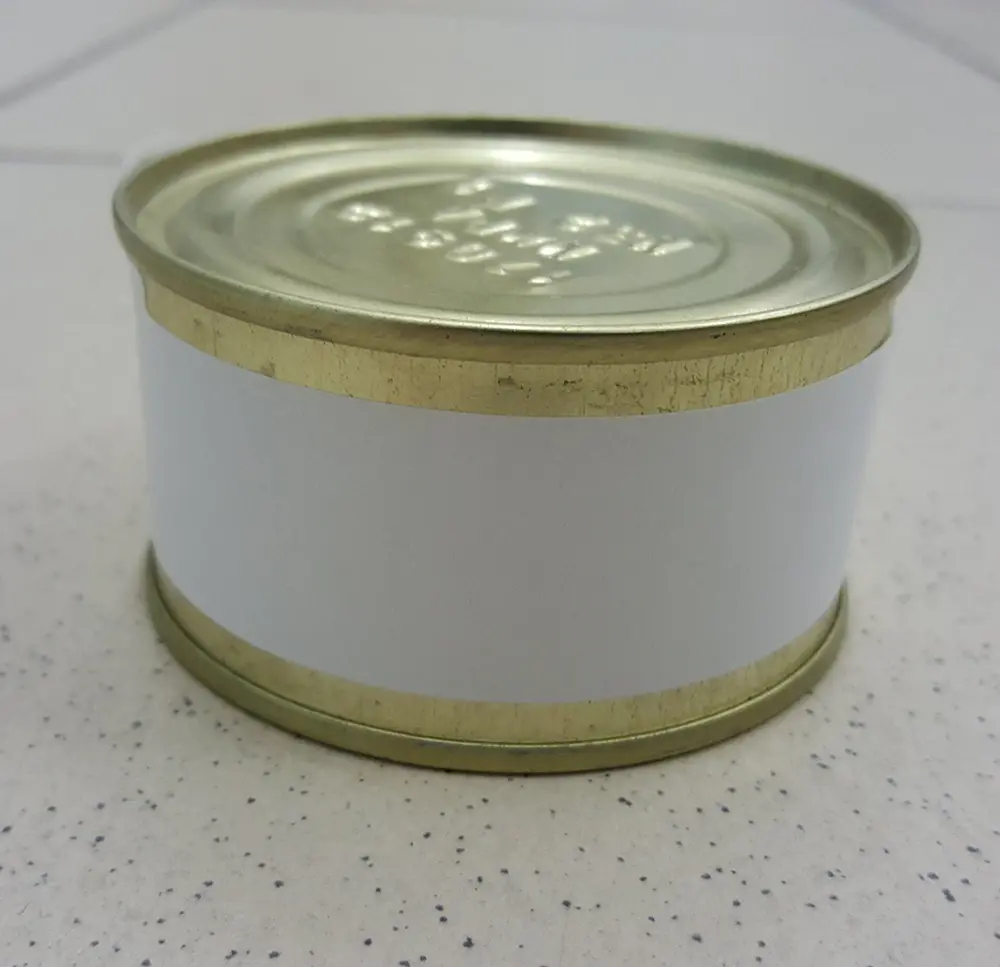
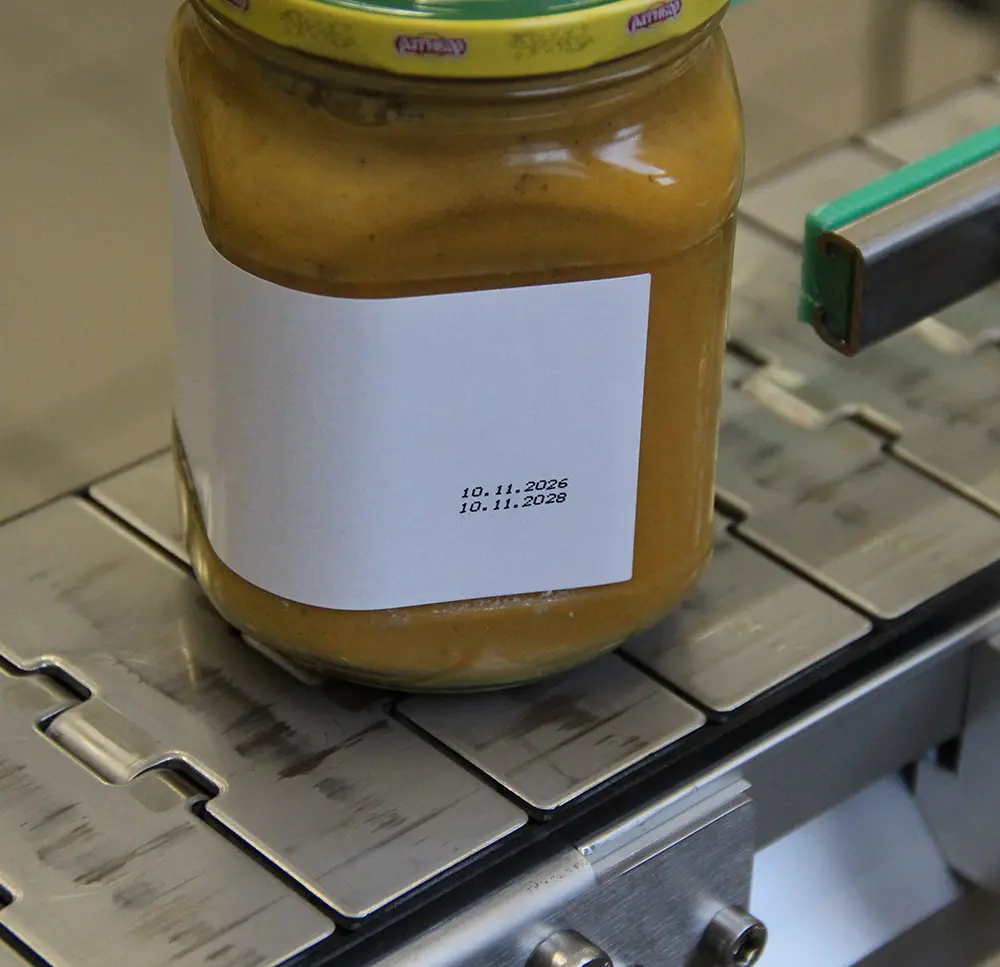
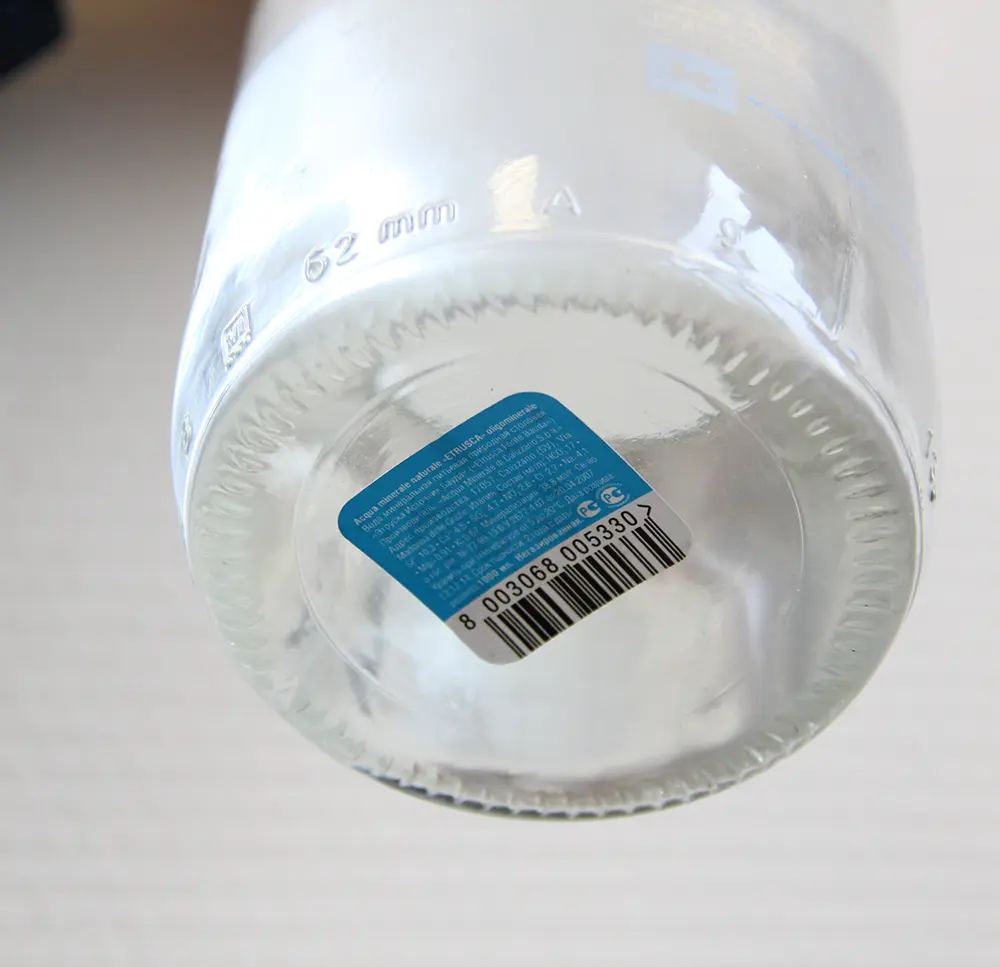
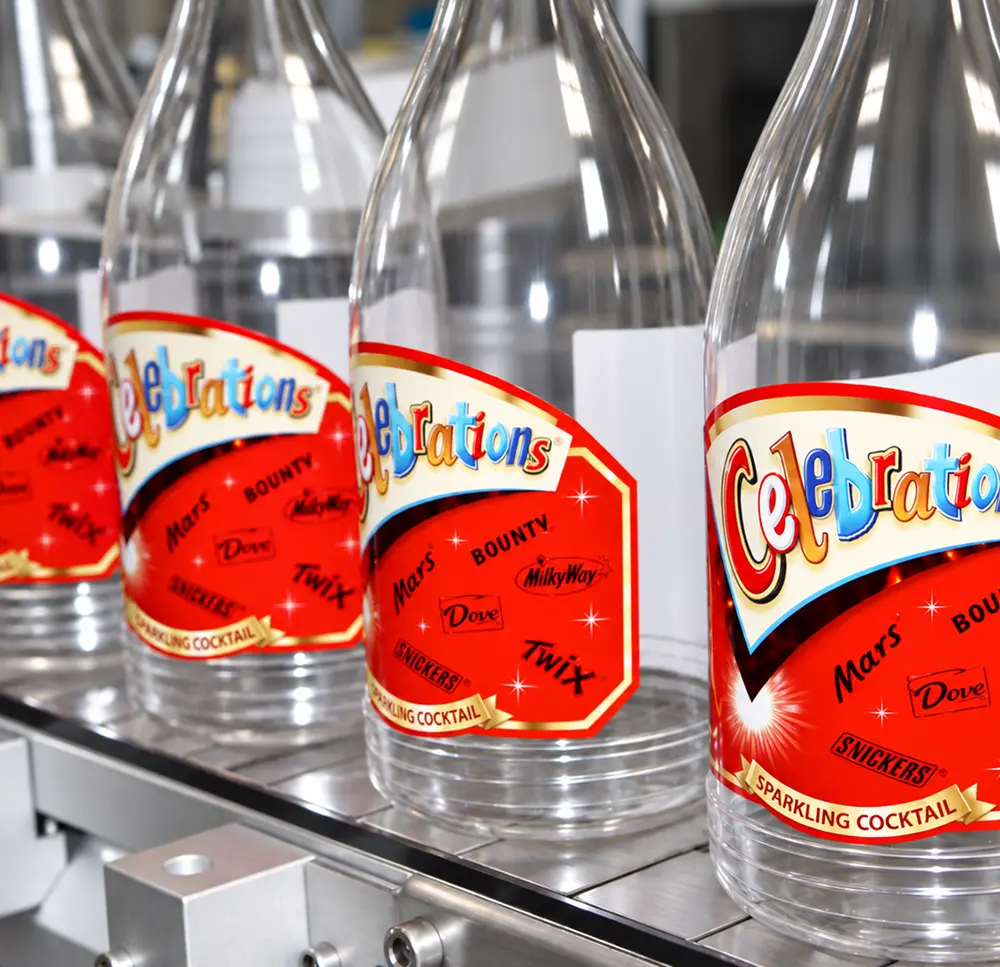
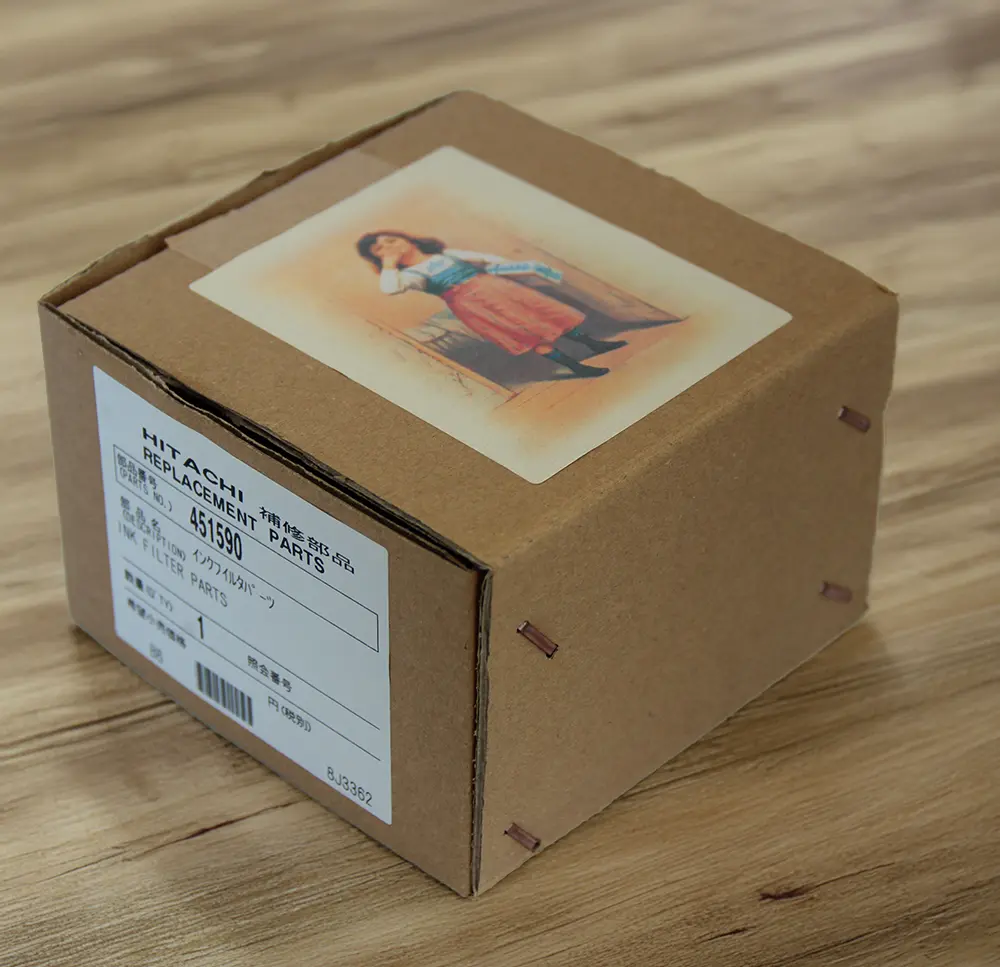
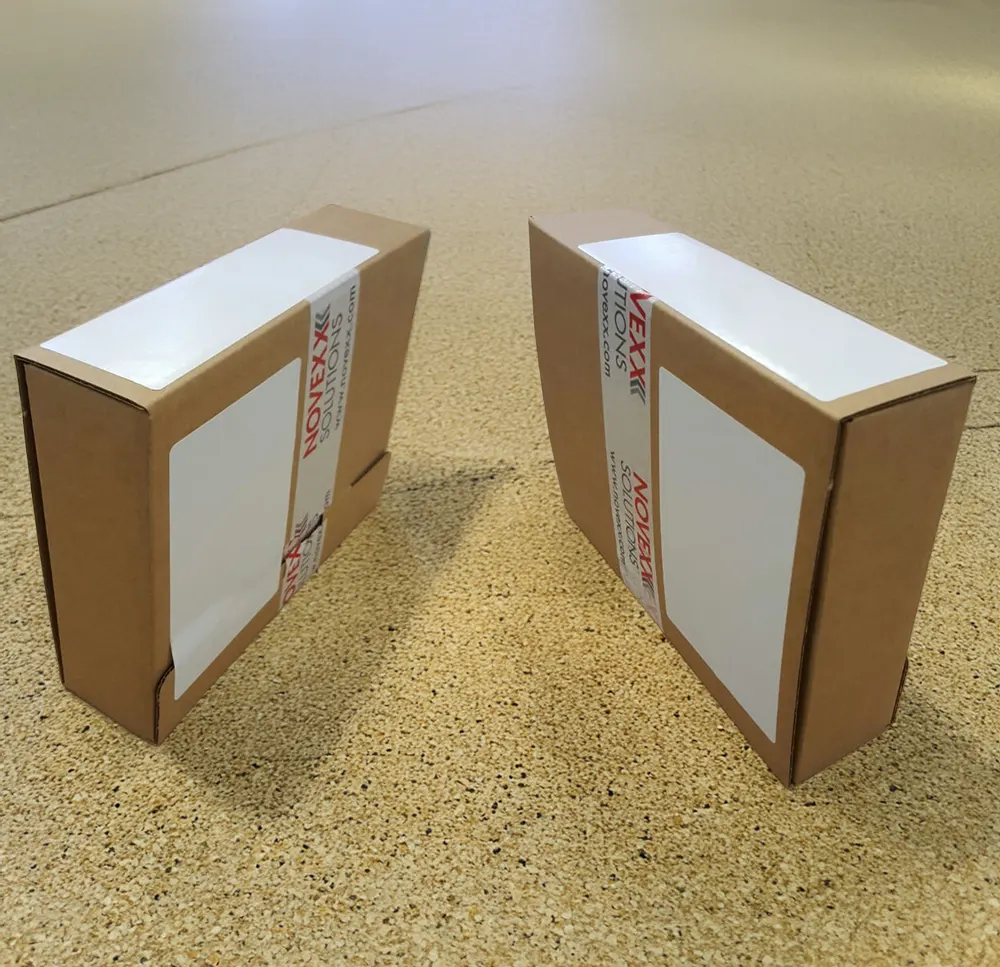
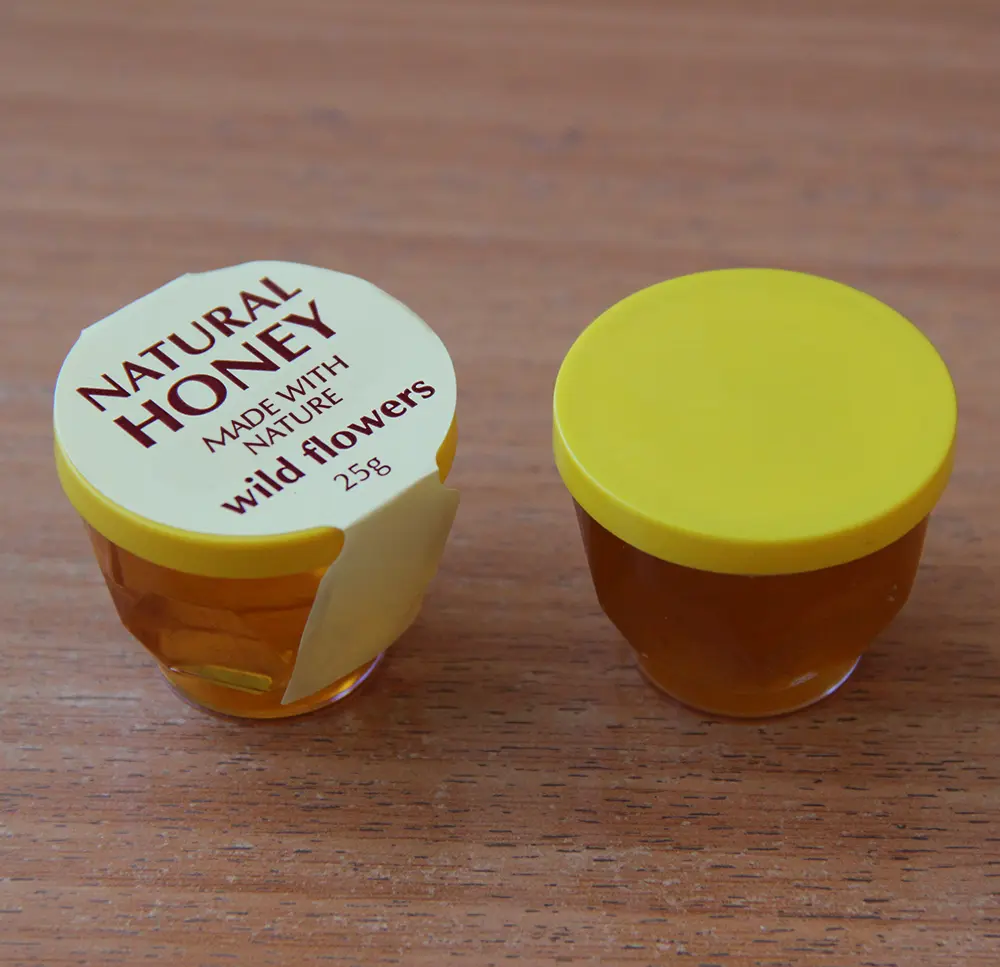
How many labelling heads are needed?
The number of heads depends on how many separate labels are needed and where they must be applied. A wrap-around label can cover a round container with one head; a C-wrap can cover several adjacent faces. Two or three distinct labels may require additional heads. The table compares typical configurations, not fixed rules.
| Configuration | Heads | Typical layouts | Typical products | Worth knowing |
|---|---|---|---|---|
|
Single-head labelling
One dispensing head
|
1 | Top, side, wrap-around or C-wrap | Trays, lids, cartons, round bottles and jars | Often the simplest configuration. A wrap-around or C-wrap label can cover several faces with one head, provided the label and package design allow it. |
|
Two-head labelling
Typically two separate labels
|
2 | Front and back, top and bottom, or top and side | Oval and flat-sided bottles, punnets, clamshells, cases | Product handling and sensor timing help align separate labels on the pack. The exact arrangement depends on the required positions. |
|
Three-head labelling
Typically three separate labels
|
3 | Three separate labels on different faces | Square and rectangular containers, cases, display-ready packaging | Useful when three separate labels are required. A single continuous C-wrap may achieve the coverage with fewer heads. |
Labelling heads may use Novexx XLS 2xx, XLS 30x or Savema D-series equipment, depending on label size, speed and operating conditions. For variable data, a Novexx XPA 9xx print-and-apply system or a compatible thermal transfer overprinter may be considered. Throughput, overall dimensions and power requirements depend on the final configuration.
Thinking about automating your labelling?
Send us the product, the label artwork, your output per hour and a photo of the line. We will tell you how many heads you need, and whether one would do.
Common questions about labelling machines
Start with the number of distinct labels, not simply the number of faces to be covered. One wrap-around label may replace separate front and back labels on a round container. A C-wrap can cover three adjoining faces using a single label and potentially one head. Whether this works depends on the package shape, label material and required layout.
Using fewer heads can reduce equipment cost, machine size and changeover work. We can assess the pack and artwork to recommend an appropriate configuration rather than adding heads unnecessarily.
A complete system may include a conveyor, guides, side belts, an orientation unit, labelling heads, product sensors, controls, a frame and guarding. The exact equipment varies by installation. Options can include a conveyor encoder, print-and-apply equipment, label inspection and a reject mechanism.
Round, straight-sided containers are generally well suited to wrap-around labels. Oval, flat-sided and strongly tapered containers may need separate labels or a specially designed wrap. Label material and container geometry should be tested before choosing the method.
Yes. If only selected details change, such as the date or batch number, a thermal transfer overprinter can add them to pre-printed labels, as with a suitably equipped Savema D-series system. When complete labels must be generated for individual products, a Novexx XPA 9xx print-and-apply system is another option. The most suitable approach depends on the variable data, label volume and production cycle.
The achievable output depends on product spacing, label length, applicator cycle and the chosen configuration. Final placement accuracy also depends on how consistently products are guided. For context, NOVEXX specifies dispensing speeds of up to 70 m/min for certain XLS 2xx models, while the XLS 30x's ±0.5 mm figure describes label stop accuracy at the dispensing edge, not finished label position on the pack. A realistic estimate requires details of your line and, where appropriate, trials.
Not necessarily. Adjustable guides and stored settings can make it practical to run several pack formats, but the required range should be included in the original specification. Provide the smallest and largest containers, planned future formats and all label sizes so we can assess changeover requirements.